
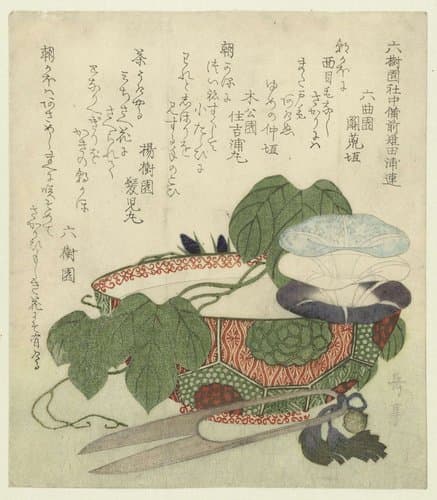
Bloeiende winde in een porseleinen kom
ca. 1820
Medium
nishikie, with metallic pigments
Dimensions
186; 211
Rights
Public Domain
About this artwork
collector's mark, verso, stamped: Lugt 2228
Art Historical Context
**Bloeiende winde een porseleinen kom (Blooming Morning Glories in Porcelain Bowl), created around 1820 by Yashimaakutei, exemplifies the refined artistry of Japan's Edo-period ukiyo-e tradition. Gakutei, a master printmaker known for his delicate surimono—luxurious, privately commissioned woodblock printscaptures the ephemeral beauty of morning glories spilling from a pristine porcelain bowl. These vibrant blue flowers, symbols of summer's fleeting joy in Japanese culture, are rendered with exquisite precision, highlighting the artist's skill in celebrating nature's transience. Printed in *nishikie* (brocade pictures), this work employs multicolored woodblock techniques enhanced by metallic pigments, which shimmer like gold and silver flecks, evoking the opulence of high-end commissions for poetry societies or New Year's greetings. At 211 × 186 mm, its intimate scale invites close contemplation, a hallmark of surimono that blurred lines between art and personal expression during the early 19th century. The verso bears a collector's mark (Lugt 2228), underscoring its provenance from a distinguished European collection and its enduring appeal across cultures. This piece not only showcases Gakutei's poetic sensitivity but also reflects the era's fusion of floral motifs with fine ceramics, bridging everyday beauty and artistic elegance.
About the Artist
Yashima Gakutei · 1786–1868
Yashima Gakutei (c. 1786–1868), born in Osaka as the illegitimate son of a Tokugawa shogunate samurai named Hirata, adopted the name from his mother's subsequent marriage into the Yashima clan. Little is documented about his early years beyond these familial ties, but he pursued artistic training under the esteemed ukiyo-e masters Totoya Hokkei and Katsushika Hokusai, absorbing their precision in ...