
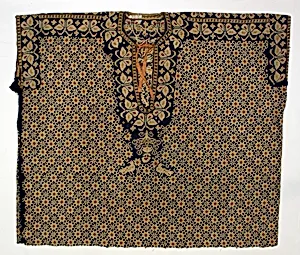
Blouse
Unknown Artist
17th century
Medium
silk
Dimensions
21 1/4 × 24 1/2 in. (54 × 62.2 cm)
Classification
Main dress-Womenswear
Culture
India
Department
Asian Art
Museum
Metropolitan Museum of Art, New York, NY
Credit
Gift of Mrs. Vava Katchadourian, 1944
Accession Number
C.I.44.111
Rights
Public Domain
Art Historical Context
Step into the opulent world of 17-century India with this delicate silk blouse, a rare surviving example of women's everyday finery. Crafted from luxurious silk—a fabric prized for its sheen, durability, and status as a trade staple—this garment measures 21¼ × 24½ inches, fitting the form of a choli, the short, fitted blouse traditionally paired with a sari. Its presence in the Metropolitan Museum of Art's Asian Art department highlights sophistication of Indian textile traditions during the Mughal era, when silk weaving flourished through royal workshops and regional artisans. Silk's significance in Indian culture extended beyond beauty; it symbolized wealth and refinement, often dyed with vibrant natural hues and adorned with intricate embroidery or weaves (though specifics here remain a tantalizing mystery due to the unknown artist). Women's blouses like this one were essential to daily dress, blending functionality with artistry in a society where clothing conveyed identity and hierarchy. Generously gifted to the Met in 1944 by Mrs. Vava Katchadourian, this piece invites us to appreciate the anonymous hands that wove threads of history, preserving a whisper of India's textile legacy for modern eyes.