
Bodhisattva Maitreya, Folio from a dispersed Ashtasahasrika Prajnaparamita (Perfection of Wisdom) Manuscript
early 12th century
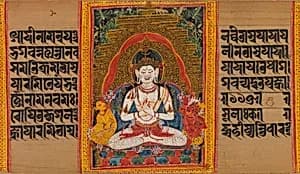
Medium
Opaque watercolor on palm leaf
Dimensions
2 3/4 x 16 1/2 in. (7 x 41.9 cm)
Classification
Paintings
Culture & Period
India (Bengal) or Bangladesh · Pala period
Department
Asian Art
Museum
Metropolitan Museum of Art, New York, NY
Credit
Purchase, Lila Acheson Wallace Gift, 2001
Accession Number
2001.445d
Rights
Public Domain
Tags
Art Historical Context
This exquisite folio from an early 12th-century Ashtasahasrika Prajnaparamita manuscript depicts Bodhisattva Maitreya, the future Buddha, in a serene and graceful pose typical of Pala-period Buddhist art. Created in Bengal or present-day Bangladesh during a time when monastic centers like Nalanda flourished as hubs of learning, the painting served both devotional and educational purposes. These illuminated manuscripts were copied and illustrated to preserve and spread the profound teachings of the Perfection of Wisdom sutras, making sacred knowledge accessible to monks and lay devotees alike. Painted in opaque watercolor on palm leaf by the artist known as the Mahavihara Master, the work showcases the refined delicacy of Pala painting. The narrow, horizontal format of the palm-leaf page required artists to compose figures with elegant, flowing lines and luminous colors that would catch the light when the manuscript was held. Maitreya’s jeweled ornaments and gentle expression embody the compassionate ideals central to Mahayana Buddhism. Such manuscripts were treasured objects, often commissioned by royalty or wealthy patrons and carried across Asia along trade routes. Today, this surviving folio offers a rare glimpse into the sophisticated artistic and spiritual traditions of the Pala era, reminding viewers of the enduring power of Buddhist wisdom texts.