
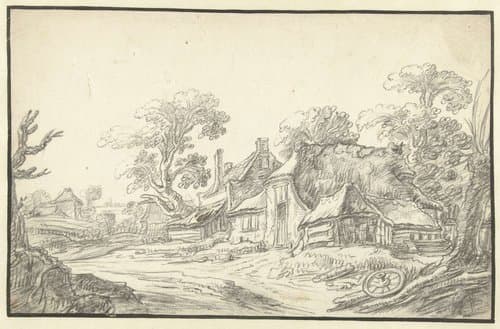
Boerenhofsteden tussen geboomte aan een landweg
1610 - 1660
Medium
paper
Dimensions
208; 322
Rights
Public Domain
About this artwork
zwart krijt
Art Historical Context
**Boerenhofsteden tussenboomte aan een land** by Pieter de Mol captures the serene beauty of the Dutch countryside in a delicate black chalk drawing on paper, measuring just 208 × 322 mm. Created sometime between 1610 and 1660, the title—translating to "Farmsteads trees along a country roadevokes a peaceful rural path lined with humble farmhouses nestled amid leafy trees, a quintessential motif of 17th-century Dutch life. Pieter de Molijn, a pioneering figure in the Dutch Golden Age, helped lay the groundwork for the realistic landscape tradition alongside artists like Jan van Goyen. Active during Holland's prosperous era of trade and reclamation, his works often celebrated the flat, watery expanses and everyday hamlets that defined the nation's identity, reflecting a growing appreciation for nature as a subject in its own right. Rendered in zwart krijt (black chalk), this intimate study showcases the medium's versatility for subtle tonal gradations, evoking depth, light, and atmosphere with soft, blended strokes. Such drawings were prized for their immediacy, serving as both studies and standalone treasures, offering visitors a glimpse into the meticulous process behind the era's masterful oil landscapes.