
Bord van faience
ca. 1760 - ca. 1800
Medium
plate (dishes)
Dimensions
23
Rights
Public Domain
About this artwork
zegel, onderkant bord, geplakt: ‘2236/ B’
Art Historical Context
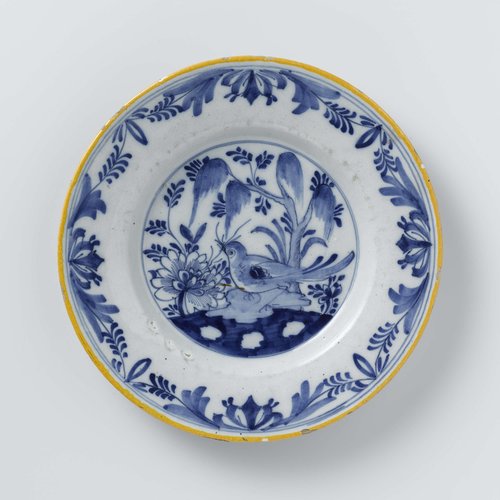
This elegant faience plate, dating from around 1760 to 1800, exemplifies the refined tableware produced in Europe during the late Enlightenment era. Measuring 23 cm in diameter, served as a practical yet decorative dish for daily meals or special occasions. Created anonymously by skilled potters, such pieces were commonplace in households across the Netherlands and beyond, reflecting the era's growing middle-class appetite for affordable luxury ceramics. Faience, a tin-glazed earthenware, was a hallmark of 18th-century pottery innovation. Artisans applied a white tin-opaque glaze over fired clay, allowing vibrant painted designs to shine through while protecting the surface. This technique, inspired by Chinese porcelain and Italian maiolica, enabled mass production in centers like Delft, where "Delftware" flourished. Though decoration details are unavailable here, these plates often featured blue-and-white motifs of flowers, landscapes, or chinoiserie, blending functionality with artistic flair. A glued seal on the underside, marked ‘2236/ B’, likely indicates a museum inventory number, underscoring the plate's preservation as a cultural artifact. It offers a window into 18th-century domestic life, where such dishes symbolized taste and prosperity amid expanding global trade in ceramics.
About the Artist
anonymous
In the vast tapestry of art history, "Anonymous" stands not as a singular individual but as a collective designation for countless unidentified creators whose works have endured across millennia. These artists, spanning prehistoric cave painters to medieval illuminators and folk craftsmen, produced the foundational layers of human visual culture. Prior to the Renaissance, when individual fame emer...