
Border
Unknown Artist
1723–74
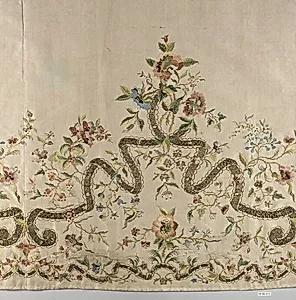
Medium
Silk and metal thread on silk
Dimensions
L. 40 1/2 x W. 23 inches (102.9 x 58.4 cm)
Classification
Textiles-Embroidered
Culture
French
Department
European Sculpture and Decorative Arts
Museum
Metropolitan Museum of Art, New York, NY
Credit
Rogers Fund, 1909
Accession Number
09.50.913
Rights
Public Domain
Art Historical Context
This exquisite embroidered border, created in France between 1723 and1774, captures the opulent spirit of the Rococo era under Louis XV. Measuring 40½ by 23 inches, it's a narrow panel likely designed for adorning garments, furniture, or bed linens, showcasing the lavish decorative arts prized by the French aristocracy. Produced anonymously by skilled embroiderers, it reflects the period's emphasis on luxury textiles as status symbols, blending artistry with everyday elegance in grand châteaux and salons. Crafted from silk ground with silk and metal threads, the piece highlights masterful embroidery techniques. The shimmering metal threads—often gold or silver—add a regal gleam, mimicking woven brocades while allowing for intricate, flowing motifs typical of French design. This labor-intensive process, involving precise stitching by hand, underscores the era's technical prowess and the role of women in domestic crafts that rivaled professional workshops. Housed in The Metropolitan Museum of Art's European Sculpture and Decorative Arts Department (acquired via the Rogers Fund in 1909), this border offers a tactile glimpse into 18th-century French culture, where textiles wove together fashion, interior design, and social display. Visitors can appreciate how such works elevated the ordinary into the extraordinary.