
Border
Unknown Artist
19th century
Classification
Textiles-Woven
Culture
French
Department
European Sculpture and Decorative Arts
Museum
Metropolitan Museum of Art, New York, NY
Credit
Gift of The United Piece Dye Works, 1936
Accession Number
36.90.2295
Rights
Public Domain
Tags
Art Historical Context
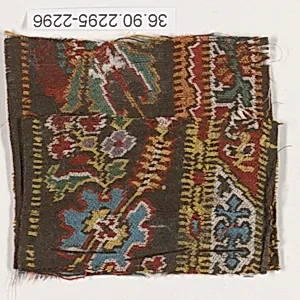
This exquisite 19th-century woven textile border, originating from France, exemplifies the refined artistry of European decorative arts during a period of industrial innovation and opulent design. Titled simply *Border*, it features delicate motifs of flowers and leaves, motifs that were immensely popular in French textiles for their naturalistic elegance and versatility in adorning garments, furnishings, or architectural elements. As part of the Metropolitan Museum of Art's European Sculpture and Decorative collection, it highlights France's longstanding mastery in textile production, where woven fabrics served both practical and aesthetic purposes in everyday luxury. The medium of woven textiles holds particular significance here, likely employing advanced techniques such as the Jacquard loom—perfected in early 19th-century Lyon—which enabled intricate, repeatable patterns without manual labor. This innovation democratized complex designs, blending craftsmanship with emerging industrialization and reflecting France's cultural prestige in global trade. Donated in 1936 by The United Piece Dye Works, the piece preserves a snapshot of this vibrant tradition, inviting visitors to appreciate how floral borders evoked the beauty of nature amid rapid modernization. Though the artist remains unknown, *Border* captivates with its timeless appeal, a testament to anonymous makers whose skill shaped domestic splendor across Europe.