
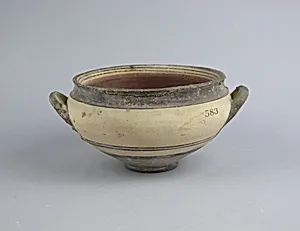
Bowl
Unknown Artist
850–750 BCE
Medium
Terracotta
Dimensions
3 9/16in. (9.1cm) Other (mouth): 5 7/8in. (14.9cm)
Classification
Vases
Culture & Period
Cypriot · Cypro-Geometric III ?
Department
Greek and Roman Art
Museum
Metropolitan Museum of Art, New York, NY
Credit
The Cesnola Collection, Purchased by subscription, 1874–76
Accession Number
74.51.545
Rights
Public Domain
Art Historical Context
This elegant terracotta bowl hails from ancient Cyprus, dating to the Cypro-Ge III period around 850–750 BCE. Crafted from fired clay, it measures just 3 9/16 inches (9.1 cm) in height with a wide mouth of 5 7/8 inches (14.9 cm), making it a practical yet refined vessel likely used for serving food or liquids in daily life or rituals. As a product of Cypriot pottery traditions, it exemplifies the Iron Age craftsmanship of the island, a cultural crossroads blending influences from the Aegean, Levant, and local innovators. The Cypro-Geometric style marked a shift toward more standardized forms and subtle geometric motifs on pottery, reflecting Cyprus's growing trade networks and urbanization during this era. Though decoration details are sparse, such bowls highlight the skill of unnamed potters who wheel-threw or hand-built wares for both utilitarian and ceremonial purposes. This piece, classified among vases in the Metropolitan Museum of Art's Greek and Roman Art department, entered the collection via The Cesnola Collection—assembled by diplomat Luigi Palma di Cesnola in the 19th century through purchases funded by public subscription in 1874–76. Today, it offers a window into Cyprus's vibrant ancient world, reminding us how everyday objects like this bowl carried the essence of a thriving Mediterranean culture.