
Bowl
Unknown Artist
15th century
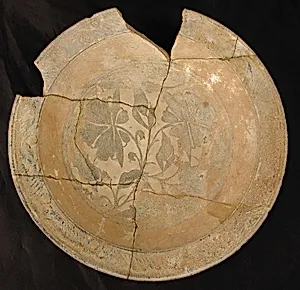
Medium
Earthenware; gritty composed body, blue on white decoration under transparent glaze
Dimensions
H. 3 1/8 in. (8 cm) Diam. 10 15/16 in. (27.8 cm)
Classification
Ceramics
Department
Islamic Art
Museum
Metropolitan Museum of Art, New York, NY
Credit
Rogers Fund, 1948
Accession Number
48.101.26
Rights
Public Domain
Tags
Art Historical Context
This elegant 15th-century earthen bowl from the Islamic world exemplifies the refined ceramic traditions of the medieval Islamic courts. Measuring just over 3 inches high and 11 inches in diameter its wide, shallow form was ideal for serving fruits, sweets, or beverages during communal meals. Crafted from a gritty body typical of regional clays, it features vibrant blue-on-white decoration under transparent glaze—a technique that created a luminous, porcelain-like sheen, evoking luxury despite the humble earthenware medium. The intricate motifs of flowers and leaves adorning its interior reflect the Islamic artistic emphasis on nature's beauty, symbolizing paradise gardens and abundance in Qur'anic imagery. This blue-and-white palette, popularized in the Timurid and Ottoman eras, drew inspiration from Chinese imports, blending Eastern influences with local ingenuity. Such bowls were not only functional but status symbols, showcasing potters' mastery of underglaze painting and firing techniques. Acquired through the Rogers Fund in 1948, this piece now graces the Metropolitan Museum of Art's Islamic Art department, offering a window into the vibrant cultural exchanges of the 15th century. Visitors can appreciate how everyday objects became canvases for poetic expression in the Islamic world.