
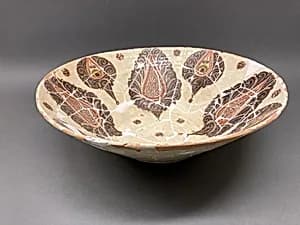
Bowl
Unknown Artist
10th century
Medium
Earthenware; glazed
Dimensions
H. 5 1/8 (13 cm) Diam. 14 5/16 in. (36.4 cm)
Classification
Ceramics
Department
Islamic Art
Museum
Metropolitan Museum of Art, New York, NY
Credit
Purchase, Joseph Pulitzer Bequest, 1965
Accession Number
65.106.1
Rights
Public Domain
Art Historical Context
This elegant 10th-century earthen bowl, hailing from the Islamic world, exemplifies the refined ceramic traditions of the Abbasid era. Crafted during a golden age of Islamic art under the Abbasid Caliphate ( in Baghdad), such vessels were everyday objects elevated to artistry through skilled pottery-making. Measuring 5 1/8 inches high 14 5/16 inches in diameter, wide, shallow form was ideal for serving fruits, sweets, or communal meals, reflecting the social customs of medieval Islamic households. The bowl's glazed earthenware medium marks a pivotal advancement in ceramic technology. Islamic potters perfected high-fired glazes around this time, often in vibrant turquoise or cobalt blues inspired by Chinese imports via Silk Road trade. This glossy surface not only sealed the porous clay for practicality but also showcased luster effects—metallic sheens achieved through metallic oxides—symbolizing luxury and technical mastery. Though the artist remains unknown, these bowls highlight anonymous artisans' contributions to a thriving industry that influenced ceramics across the Mediterranean and beyond. Acquired by the Metropolitan Museum of Art through the Joseph Pulitzer Bequest in 1965, this piece invites us to appreciate the interplay of utility and beauty in Islamic culture, where even humble tableware embodied sophistication and cultural exchange.