
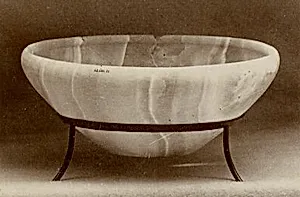
Bowl
Unknown Artist
ca. 3100–2649 B.C.
Medium
Travertine (Egyptian alabaster)
Dimensions
3 11/16 in. (9.3 cm)
Classification
Bowl
Period
Early Dynastic Period
Department
Egyptian Art
Museum
Metropolitan Museum of Art, New York, NY
Credit
Rogers Fund, 1912
Accession Number
12.181.71
Rights
Public Domain
Art Historical Context
This delicate travertine bowl, crafted around 3100–2649 B.C. during Egypt's Early Dynastic PeriodDynasty 2), the dawn of pharaonic civilization. Measuring just 3 11/16 inches (9.3 cm) in height, it was fashioned from Egyptian alabaster—a soft, translucent stone quarried near the Nile, prized for its luminous quality and ease of carving. Such vessels were hollowed using bow-driven drills and abrasives, showcasing early mastery of stoneworking techniques that transitioned Egypt from predynastic pottery to enduring luxury goods. In the turbulent era following Egypt's unification under the first kings, these bowls held practical and symbolic importance. Likely used for oils, cosmetics, or ritual offerings by the elite, they often accompanied the dead in tombs as grave goods, reflecting beliefs in the afterlife. Their simple, elegant form highlights the period's focus on functionality blended with refined aesthetics, bridging utilitarian craft and emerging monumental art. Today, acquired through the Rogers Fund in 1912, this bowl at the Metropolitan Museum of Art offers a tangible glimpse into Dynasty 2's world—when Memphis rose as a capital and hieroglyphs began to record history. A modest treasure, it whispers of ancient lives preserved in stone.