
Bowl
Unknown Artist
ca. 1840
Medium
Tin-glazed earthenware
Dimensions
Diam. 15 7/8 in. (40.3 cm)
Classification
Bowl
Culture
Mexican
Department
The American Wing
Museum
Metropolitan Museum of Art, New York, NY
Credit
Gift of Mrs. Robert W. de Forest, 1911
Accession Number
11.87.54
Rights
Public Domain
Tags
Art Historical Context
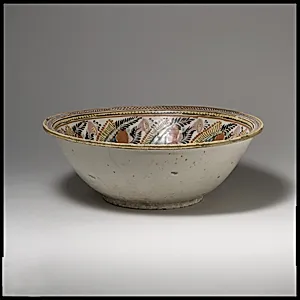
This vibrant Mexican bowl, crafted around 1840 by an unknown artist, exemplifies the enduring of tin-glazed earthen, a technique with roots in Islamic and Renaissance ceramics that flourished in Mexico during the colonial era. The opaque white tin glaze provided a smooth canvas for bold, colorful designs—here likely featuring floral motifs, as suggested by its tags—allowing artisans to create durable, decorative objects for everyday use like serving food or displaying in homes. Measuring a generous 15⅞ inches in diameter, its practical size speaks to its role in domestic life. Housed in The Metropolitan Museum of Art's American Wing since a 1911 gift from Mrs. Robert W. de Forest, this piece bridges Mexican folk artistry with American collecting tastes of the early 20th century. In mid-19th-century Mexico, post-independence, such pottery from regions like Puebla thrived, blending European influences with local creativity. Its presence in an American collection highlights cross-cultural exchanges, perhaps through trade or migration, offering visitors a glimpse into the lively aesthetics of everyday Mexican craftsmanship that continues to inspire modern design.