
Bowl
Unknown Artist
1785–90
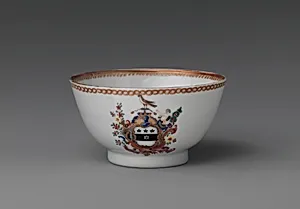
Medium
Porcelain
Dimensions
Diam. 6 1/4 in. (15.9 cm)
Classification
Bowl
Culture
Chinese, for American market
Department
The American Wing
Museum
Metropolitan Museum of Art, New York, NY
Credit
Bequest of James T. Woodward, 1910
Accession Number
10.149.122
Rights
Public Domain
Tags
Art Historical Context
This delicate porcelain bowl, crafted in China between 1785 and 1790 specifically for the American market, the height of early trans-Pacific trade luxury. Measuring just 6¼ inches in diameter, it intricate decorations of birds and a coat of—likely a personalized emblem for prosperous American family. Produced during the post-Revolutionary era, when U.S. merchants eagerly imported Chinese wares via the Canton trade system, such bowls graced elite dining tables as symbols of newfound wealth and global sophistication. Chinese porcelain masters employed sophisticated techniques, firing fine kaolin clay at high temperatures to achieve its signature translucent glow and durability. The underglaze or enamel motifs of birds and heraldry reflect the era's fusion of Eastern craftsmanship with Western tastes, showcasing how artisans adapted to export demands by incorporating family crests. This piece highlights cultural exchange: while rooted in imperial kiln traditions, it catered to America's emerging elite. Housed in The Metropolitan Museum of Art's American Wing and bequeathed by James T. Woodward in 1910, the bowl offers a tangible link to 18th-century maritime commerce and domestic refinement, inviting us to ponder the journeys of everyday objects across oceans.