
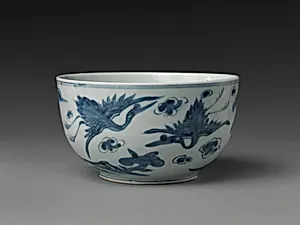
백자 청화 십장생 무늬 대접 조선|白磁靑畫十長生文大楪 朝鮮|Bowl decorated with the Ten Symbols of Longevity
Unknown Artist
19th century
Medium
Porcelain with cobalt-blue design
Dimensions
H. 4 in. (10.2 cm); Diam. 7 1/4 in. (18.4 cm); Diam. of foot 3 7/8 in. (9.8 cm)
Classification
Ceramics
Culture & Period
Korea · Joseon dynasty (1392–1910)
Department
Asian Art
Museum
Metropolitan Museum of Art, New York, NY
Credit
Purchase, Michael M. Kim and Jeanie J. Kim Gift, 2015
Accession Number
2015.271
Rights
Public Domain
Tags
Art Historical Context
This elegant Joseon dynasty bowl, crafted in the 19th, exemplifies Korea's mastery of white porcelain (baekja) adorned with underglaze-blue designs (cheonghwa). about 7¼ inches in diameter, the wide, shallow form was ideal for serving rice or soup in everyday households, yet its decoration elevates it to a symbol of refined taste. The exterior and interior feature the Ten Symbols of LongevityShipjangsaeng)—auspicious motifs including cranes, deer, pine trees, tortoises, and mushrooms—painted in vibrant blue against the luminous white clay body, then glazed and fired to high temperatures for durability and sheen. During the Joseon period (1392–1910), porcelain production flourished at royal kilns like those in Gwangju, drawing from Chinese Ming influences but emphasizing Confucian ideals of simplicity and harmony. Cobalt blue, imported as expensive cobalt ore, was applied meticulously before glazing, creating a subtle depth that withstands centuries. These symbols, rooted in Daoist and folk traditions, wished viewers health and eternal life, making the bowl both functional and spiritually protective. A gift to the Metropolitan Museum of Art in 2015, this piece captures Joseon's ceramic legacy: understated beauty conveying profound cultural values. Visitors might imagine it gracing a scholar's table, evoking timeless wishes for prosperity.