
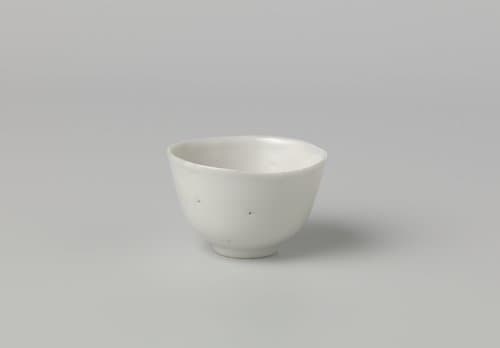
Bowl with a white glaze and irregular rim
c. 1600 - c. 1699
Medium
turning
Dimensions
2.4; 3.7; 5.9
Rights
Public Domain
About this artwork
voet: diameter 2,4 cm
Art Historical Context
This delicate bowl, crafted anonymously around 1600–1699, exemplifies the artistry of wheel-thrown ceramics from the late Renaissance to early Baroque era. Measuring just 3.7 cm high and 5.9 cm in diameter, with a sturdy foot of 2.4 cm, its petite scale suggests it may have served intimate purposes, such as holding spices, inks, or small offerings in a domestic or scholarly setting. The irregular rim adds a touch of organic whimsy, hinting at the potter's hand-guided finishing—a common trait in pre-industrial workshops where precision met personal expression. The medium of "turning," or wheel-throwing, was a cornerstone technique of the time, allowing artisans to shape clay with rhythmic precision on a potter's wheel. The pristine white glaze not only protected the vessel but also evoked purity and elegance, a popular aesthetic in European delftware or Asian export wares traded along burgeoning global routes. Though the maker remains unknown, such pieces reflect the era's ceramic innovation, bridging utilitarian craft and subtle luxury amid expanding trade networks. Today, this bowl invites us to appreciate the quiet mastery of anonymous hands, preserving a slice of everyday history in its simple, luminous form.
About the Artist
anonymous
In the vast tapestry of art history, "Anonymous" stands not as a singular individual but as a collective designation for countless unidentified creators whose works have endured across millennia. These artists, spanning prehistoric cave painters to medieval illuminators and folk craftsmen, produced the foundational layers of human visual culture. Prior to the Renaissance, when individual fame emer...