
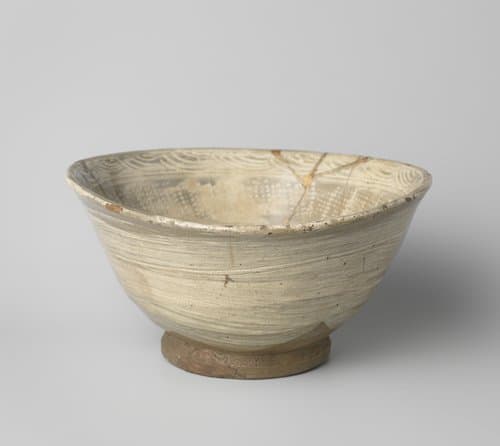
Bowl with incised floral patterns and ornamental borders
ca. 1700 - ca. 1799
Medium
turning
Dimensions
11.5; 24.5; 10.5
Rights
Public Domain
About this artwork
rand: diameter 24,5 cm
Art Historical Context
This elegant bowl, crafted anonymously around 1700–1799, exemplifies the artistry of traditional turning techniques, where a lathe was used to shape wood into symmetrical functional forms. Measuring .5 cm in height and 24.5 cm in at the rim, its wide, shallow profile made it ideal for serving food or as a decorative centerpiece. The surface features finely incised floral patterns and borders, carved directly into the wood after turning, adding a delicate, lace-like texture that catches the light. Dating to the 18th century, this piece reflects the era's appreciation for vernacular craftsmanship, when skilled artisans produced everyday objects with surprising sophistication. Turning allowed for precise curves and thin walls, while incision—a labor-intensive method—elevated the bowl from utility to ornament, blending functionality with folk artistry. Such motifs, evoking nature's abundance, were common in decorative wares across Europe and beyond, symbolizing prosperity and harmony. Though the maker remains unknown, the bowl's preservation highlights the enduring value of anonymous hands in art history. Visitors might imagine it gracing a modest 18th-century table, whispering stories of daily life through its timeless floral whispers.
About the Artist
anonymous
In the vast tapestry of art history, "Anonymous" stands not as a singular individual but as a collective designation for countless unidentified creators whose works have endured across millennia. These artists, spanning prehistoric cave painters to medieval illuminators and folk craftsmen, produced the foundational layers of human visual culture. Prior to the Renaissance, when individual fame emer...