
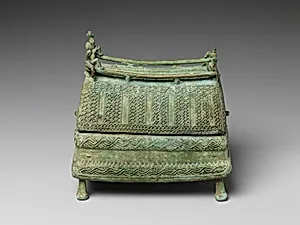
Box for Betel Leaves
Unknown Artist
ca. 500 BCE–300 CE
Medium
Bronze
Dimensions
H. 6 in. (15.2 cm); W. 6 1/2 in. (16.5 cm); D. 5 in. (12.7 cm)
Classification
Metalwork
Culture & Period
Indonesia (Sulawesi) · Bronze and Iron Age period
Department
Asian Art
Museum
Metropolitan Museum of Art, New York, NY
Credit
Samuel Eilenberg Collection, Bequest of Samuel Eilenberg, 1998
Accession Number
2000.284.47a, b
Rights
Public Domain
Art Historical Context
This exquisite bronze box, crafted by an unknown artist from Sulawesi, Indonesia, dates to the Bronze and Iron Age (ca. 500 BCE–300 CE). Measuring a compact 6 inches high, 6½ inches wide, and 5 deep, it served as a portable container for betel leaves key element in ancient Southeast Asian traditions. Betel chewing, leaves with areca nuts and lime paste, was not just a daily habit but a social ritual fostering community bonds and even spiritual practices across island cultures. Housed in the Metropolitan Museum of Art's Asian Art Department as part of the Samuel Eilenberg Collection, this metalwork exemplifies the sophisticated bronze-casting techniques of prehistoric Indonesian artisans. During this era, Sulawesi's makers produced functional yet finely wrought objects, blending utility with subtle aesthetic appeal. The box's sturdy form reflects the durability needed for everyday use amid the region's tropical climate and maritime lifestyles. Though details of its decoration remain unnoted, its survival highlights the enduring legacy of Bronze Age metalwork in Indonesia, offering a tangible glimpse into pre-literate societies where such items bridged the mundane and the ceremonial. A true treasure from antiquity!