
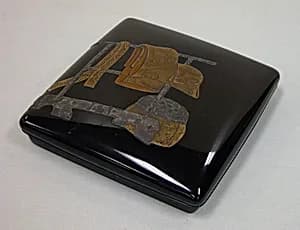
Box for Writing Implements with Design of Kimono on Rack and Incense Burner
Unknown Artist
19th century
Medium
Lacquer with silver and gold
Dimensions
a) cover: W. 8 3/16 in. (20.8 cm); L. 8 7/8 in. (22.5 cm) b) box: W. 7 3/4 in. (19.7 cm); L. 8 1/2 in. (21.6 cm) c) tray: W. 7 1/4 in. (18.4 xm); L. 8 in. (20.3 cm) d) water container lid: Diam. 1 7/16 in. (3.7 cm) e) water container: Diam. 1 11/16 in. (4.3 cm) f) ink tray: W. 2 7/8 in. (7.3 cm); L. 4 3/8 in. (11.1 cm) g-h) brushes: L. 7 1/8 in. (18.1 cm)
Classification
Lacquer
Culture & Period
Japan · Edo period (1615–1868)
Department
Asian Art
Museum
Metropolitan Museum of Art, New York, NY
Credit
Gift of The Museum of Modern Art, 1957
Accession Number
57.110a–h
Rights
Public Domain
Tags
Art Historical Context
This elegant lacquer writing box set, crafted by an unknown Japanese artist in the 19 century during the late Edo period (1615–1868), served as a portable desk for calligraphers and scholars. Titled *Box for Writing Implements with of a Kimono on Rack and Inc Burner*, it comprises lidded box, tray, water container ink tray, and two, with precise dimensions reflecting meticulous craftsmanship—such as the cover measuring 8⅞ inches long. The medium of lacquer adorned with silver and gold exemplifies Japan's renowned urushi lacquerware tradition, where layers of sap from the lacquer tree were polished to a glossy sheen and inlaid with precious metals for subtle luminescence. Floral motifs, alongside the evocative scene of a folded kimono and incense burner, evoke domestic tranquility and refined aesthetics, blending utility with artistry. In Edo-era Japan, such suzuri-bako (writing boxes) were prized possessions of the literati and samurai class, symbolizing cultural sophistication amid a flourishing urban arts scene. Donated to the Metropolitan Museum of Art in 1957, this piece highlights the period's mastery of decorative objects that elevated everyday rituals like ink calligraphy and incense ceremonies into profound expressions of harmony.