
Box (Sumiaka tebako) with Design of Pine, Bamboo, and Plum
Unknown Artist
19th century
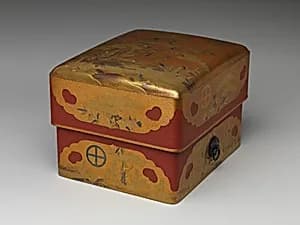
Medium
Gold maki-e on nashiji lacquer with basket
Dimensions
Overall: 8 3/4 x 10 x 10 7/8 in. (22.2 x 25.4 x 27.7 cm)
Classification
Lacquer
Culture & Period
Japan · Edo period (1615–1868)
Department
Asian Art
Museum
Metropolitan Museum of Art, New York, NY
Credit
Frederick C. Hewitt Fund, 1910
Accession Number
10.7.26
Rights
Public Domain
Tags
Art Historical Context
This exquisite lacquer box, known as a *sumiaka tebako*, hails from Japan's Edo period (16151868), a time of relative peace and flourishing craftsmanship. Crafted in the 19th century an unknown artist, it measures 8 3/4 x 10 x 10 7/8 inches and a radiant design of pine, bamboo, and plum "Three Friends of Winter" in East Asian symbolism. These motifs represent resilience (pine enduring cold), vitality (bamboo's flexibility), and hope (plum blossoms heralding spring), evoking wishes for prosperity and longevity. The box showcases masterful *maki-e* technique, where fine gold powder is sprinkled onto wet lacquer to form intricate designs, applied over a shimmering *nashiji* ground that mimics the texture of dried pear skin. This luxurious lacquerware, often used for cosmetics or inks, highlights Edo-era artistry, when lacquer became a pinnacle of Japanese decorative arts, blending functionality with opulent beauty. Acquired through the Frederick C. Hewitt Fund in 1910, this piece from the Metropolitan Museum of Art's Asian Art collection invites visitors to appreciate the meticulous patience behind its creation—layer upon layer of lacquer, polished to perfection—offering a window into Japan's refined aesthetic traditions.