
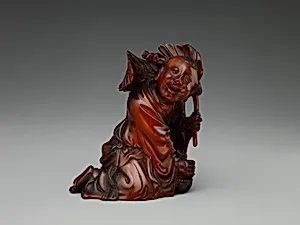
清 角雕和合二仙|Boy with leaves and box
Unknown Artist
19th century
Medium
Horn
Dimensions
H. inc. base 3 1/2 in. (8.9 cm); W. 2 3/4 in. (7 cm); D. 1 1/2 in. (3.8 cm)
Classification
Horn
Culture & Period
China · Qing dynasty (1644–1911)
Department
Asian Art
Museum
Metropolitan Museum of Art, New York, NY
Credit
Gift of Ellen Barker, 1942
Accession Number
42.90.31a, b
Rights
Public Domain
Tags
Art Historical Context
This exquisite horn carving from China's Qing dynasty (16441911), dating to the 19th, depicts a playful boy—likely one of the He Erxian, the "Two Immortals of and Unity." Standing just 3½ inches tall including its base, the figure holds leaves and a box, symbols evoking abundance and good fortune. Crafted from horn, a prized medium in Chinese decorative arts, the sculpture showcases the material's natural translucency, which allows light to illuminate intricate details like the boy's flowing robes and cheerful expression. Horn carving reached artistic heights during the Qing era, when artisans transformed tough buffalo horn into delicate, three-dimensional masterpieces through meticulous engraving and polishing techniques. This labor-intensive process demanded precision, as the medium's layered structure could reveal subtle color gradients, enhancing the work's lifelike quality. Such small-scale carvings were prized by scholars and collectors as desk ornaments or symbols of harmony in the home. In Chinese culture, the Hehe Erxian embody reconciliation, prosperity, and joyful unions, making this piece a talisman of positive wishes. Gifted to the Metropolitan Museum of Art in 1942 by Ellen Barker, it exemplifies the refined elegance of Qing-era Asian art, inviting visitors to appreciate the blend of whimsy and spiritual depth in everyday luxury.