
Bracelet with Snake-Head Endings and Arabic Inscription, One of a Pair
Unknown Artist
15th century
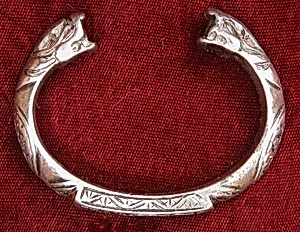
Medium
Silver; cast and chased
Classification
Jewelry
Department
Islamic Art
Museum
Metropolitan Museum of Art, New York, NY
Credit
Fletcher Fund, 1964
Accession Number
64.133.4
Rights
Public Domain
Tags
Art Historical Context
This exquisite 15th-century silver bracelet, one of a matching pair, showcases the masterful jewelry craftsmanship of the Islamic world. Crafted through casting—pouring molten silver into molds—and chasing, a technique where designs are hammered into the metal's surface for intricate detailing, it features striking snake-head endings that clasp elegantly around the wrist. An Arabic inscription adds a layer of mystery and elegance, likely invoking blessings or protective phrases common in Islamic adornments of the era. Snakes held symbolic power in many cultures, often representing guardianship or eternity, and their depiction here reflects the artistic fusion of naturalistic motifs with spiritual significance in medieval Islamic art. Such jewelry was not merely decorative but served social and talismanic purposes, worn by both men and women to signify status or ward off misfortune. Acquired through the Fletcher Fund in 1964, this piece from the Metropolitan Museum of Art's Islamic Art collection offers a window into the opulent metalworking traditions of the time, blending technical virtuosity with cultural depth.