
Bread Plate
Unknown Artist
1785–90
Medium
Porcelain
Dimensions
Diam. 6 1/4 in. (15.9 cm)
Classification
Bread plate
Culture
Chinese, for American market
Department
The American Wing
Museum
Metropolitan Museum of Art, New York, NY
Credit
Bequest of James T. Woodward, 1910
Accession Number
10.149.97
Rights
Public Domain
Tags
Art Historical Context
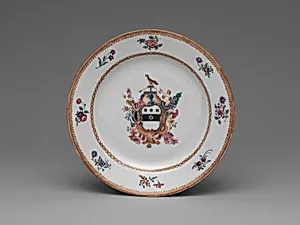
This elegant porcelain bread plate, crafted in China between 1785 and 1790 for the American market, measures just 6¼ inches (15.9 cm) in diameter—perfect for serving slices of bread at a refined 18th-century table. Adorned with delicate motifs of birds, flowers, and a prominent coat of arms, it showcases the intricate hand-painted designs typical of Chinese export porcelain. These pieces were fired at high temperatures to achieve their signature translucency and durability, making them both functional and luxurious heirlooms. Produced during the early years of direct U.S.-China trade, following the American Revolution, the plate reflects a burgeoning cultural exchange. Wealthy American merchants and families commissioned such personalized tableware, often incorporating European-style coats of arms to signify status. Housed in The Metropolitan Museum of Art's American Wing and bequeathed by James T. Woodward in 1910, it highlights how imported porcelain symbolized sophistication and global connectivity in the young republic. Today, this unassuming yet exquisite object invites us to imagine candlelit dinners where East met West, blending artistry with everyday life.