
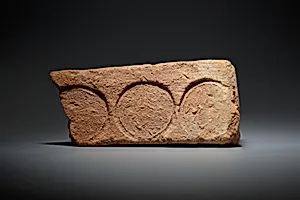
Brick Stamped with a Circular Seal
Unknown Artist
ca. 1550–1295 B.C.
Medium
Pottery
Dimensions
H. 19 cm (7 1/2 in.); preserved W. 9 cm (3 9/16 in.); preserved D. 14.5 cm (5 11/16 in.)
Classification
Cone, brick, Davies 518, Hapuseneb
Period
New Kingdom
Department
Egyptian Art
Museum
Metropolitan Museum of Art, New York, NY
Credit
Rogers Fund, 1915
Accession Number
15.10.42
Rights
Public Domain
Tags
Art Historical Context
This unassuming yet fascinating pottery brick, stamped with a circular seal, hails from Egypt's New Kingdom, specifically Dynasty 18 (ca. 1550–1295 B.C.), a age of imperial power and monumental architecture under pharaohs like Hatshepsut, Thutmose III, andhotep III. Measuring about 19 cm high, this fired clay fragment—likely from a larger mudbrick used in grand constructions such as temples or palaces—offers a tangible glimpse into ancient Egyptian building practices. Acquired by the Metropolitan Museum of Art through the Rogers Fund in 1915, it exemplifies everyday materials elevated by royal oversight. The brick's defining feature is its circular seal impression, adorned with hieroglyphs, pressed into the wet clay before firing. This technique ensured standardization and marked the brick's origin, often bearing the pharaoh's cartouche (royal name oval) to assert divine authority over massive public works. Hieroglyphs, the sacred script blending art and language, transformed functional objects into symbols of order and eternity. As a humble artifact from the Egyptian Art collection, it highlights the ingenuity of New Kingdom craftsmanship: mudbricks, mixed with straw for strength, formed the backbone of enduring structures like Karnak's hypostyle hall. This piece invites us to appreciate how even bricks whispered the stories of empire and innovation.