
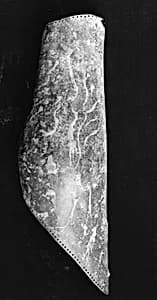
Bronze greave (shin guard)
Unknown Artist
5th century BCE
Medium
Bronze
Dimensions
length 16 3/8in. (41.6cm)
Classification
Bronzes
Culture & Period
Greek · Classical
Department
Greek and Roman Art
Museum
Metropolitan Museum of Art, New York, NY
Credit
Rogers Fund, 1906
Accession Number
06.1076
Rights
Public Domain
Tags
Art Historical Context
Step into the world of ancient Greek warriors with this striking bronze greave a shin guard from the Classical period around the 5th century BCE. Measuring 16 3/8 inches (41.6 cm) in length, this functional piece of armor was designed to protect the lower leg in battle, showcasing the Greeks' mastery of bronze casting. Acquired through the Rogers Fund in 6, it now resides in the Metropolitan Museum Art's Greek and Roman Department, classified among their exceptional bronzes. Crafted during the height of Classical Greece—think the era of the Persian Wars and the rise of democracy in Athens—this greave reflects the hoplite warrior's essential gear. Hoplites, citizen-soldiers forming the unbreakable phalanx, relied on such armor for close-quarters combat, blending practicality with aesthetic elegance. The smooth, contoured bronze surface likely mimicked the leg's anatomy, highlighting Greek artisans' anatomical precision and advanced lost-wax casting techniques that allowed for intricate, lightweight yet durable forms. Beyond protection, this artifact embodies the cultural valor of ancient Greece, where warfare intertwined with heroism in epics like the *Iliad*. It invites us to ponder the disciplined lives of those who wore it, bridging the gap between everyday functionality and timeless artistry. A true testament to Classical innovation!