
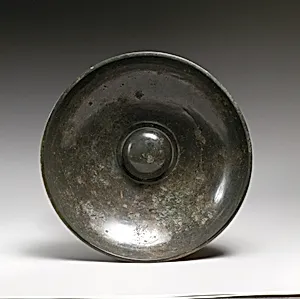
Bronze phiale (libation bowl)
Unknown Artist
7th century BCE
Medium
Bronze
Dimensions
H.: 1 3/4 in. (4.5 cm)
Classification
Bronzes
Culture & Period
Phrygian · Archaic
Department
Greek and Roman Art
Museum
Metropolitan Museum of Art, New York, NY
Credit
The Bothmer Purchase Fund, 1989
Accession Number
1989.11.6
Rights
Public Domain
Art Historical Context
This delicate bronze phiale, or libation bowl, hails from Phrygia—an ancient kingdom in Anatolia (modern-day Turkey) flourishing in the 7th BCE during the Archaic. Standing just 1 3/4 inches (4.5 cm) tall, its shallow, wide form was designed for pouring ritual offerings of wine or oil to the gods, a common practice in Phrygian religious ceremonies. Crafted by an unknown artist this vessel exemplifies the culture's mastery of bronze work, a medium prized for its durability and luster, often reserved for elite use in temples or royal settings. Phrygia, famed for legends like King Midas and his golden touch, bridged Eastern and Western artistic traditions, influencing early Greek metalwork. Such phiales were not mere utensils but symbols of piety and status, possibly used in vibrant festivals honoring deities like Cybele, the Phrygian mother goddess. The bowl's survival into the modern era underscores the enduring allure of Phrygian craftsmanship. Acquired through The Bothmer Purchase Fund in 1989, this treasure now graces the Metropolitan Museum of Art's Greek and Roman Art department, inviting visitors to ponder the sacred rituals of a lost world.