
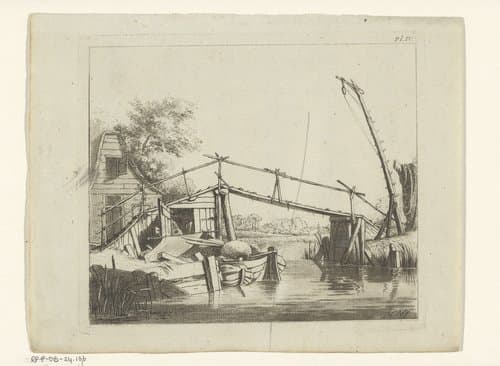
Bruggetje bij een sloot
1754 - 1825
Medium
etching
Dimensions
143; 165
Rights
Public Domain
About this artwork
height 143 mm x width 165 mm
Art Historical Context
"Bruggetje bij een sloot" ("Little Bridge by a Ditch") is a delicate etching by the Dutch artist Hermanus Numan, created between 1754 and 1825. Measuring just 143 by 165 millimeters, this small print captures a quiet moment in the Dutch countryside, where a modest wooden bridge spans a narrow waterway. Such scenes were beloved in the Netherlands, reflecting the flat, water-rich landscape that shaped daily life and national identity for centuries. Etching was a favored medium among Dutch artists of the period, allowing for fine detail and wide distribution through prints. Numan, active in the late eighteenth and early nineteenth centuries, worked within this longstanding tradition of landscape imagery that had flourished since the Dutch Golden Age. His works often celebrated the unassuming beauty of rural paths, canals, and bridges rather than grand monuments. For museum visitors today, this intimate etching offers a window into how Dutch artists found poetry in ordinary places. Its modest scale invites close looking, revealing the careful linework that brings the simple scene to life.
About the Artist
Hermanus Numan · 1744–1820
Hermanus Numan (1744-1820) was one of the leading Dutch watercolourists of the eighteenth century and a versatile artist who worked across multiple media including painting, printmaking, and theater design. Born in Ezinge and trained in decorative arts before pursuing fine art, Numan developed into a specialist in landscape watercolors, particularly views of country estates and parks that he made ...