
明嘉靖 剔紅雲龍紋漆筒|Brush holder with dragons and clouds
Unknown Artist
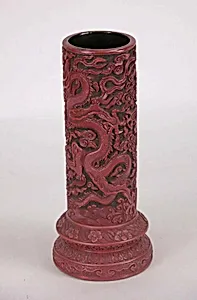
Medium
Carved red lacquer
Dimensions
H. 10 3/8 in. (26.4 cm); Diam. 4 1/2 in. (11.4 cm)
Classification
Lacquer
Culture & Period
China · Ming dynasty (1368–1644), Jiajing period (1522–66)
Department
Asian Art
Museum
Metropolitan Museum of Art, New York, NY
Credit
John Stewart Kennedy Fund, 1913
Accession Number
13.100.145
Rights
Public Domain
Tags
Art Historical Context
This exquisite brush holder, during the Jiajing period China’s Ming dynasty (152–66), exemplifies the refined artistry of carved red lacquer, known as tì h. Standing just over ten inches tall, the form features intricate dragons amid swirling clouds—a motif symbolizing imperial power, good fortune, harmony with nature. The deep red lacquer, built up in multiple layers before being meticulously carved creates a rich, tactile surface that highlights the artisan’s precision and patience. Lacquerware held special status in Ming China, where such objects were commissioned for the imperial court or scholarly elites. The technique demanded exceptional skill, as each layer of sap-based lacquer had to dry before the next was applied, sometimes requiring dozens of coatings over months or years. Dragons, reserved for imperial use, underscore the piece’s likely connection to official or courtly life. Acquired by the Metropolitan Museum of Art in 1913 through the John Stewart Kennedy Fund, this work offers visitors a glimpse into the sophisticated material culture of the Ming era, where functional items like brush holders became vehicles for profound symbolic expression.