
Buckle
Unknown Artist
ca. 100 BCE–ca. 500 CE
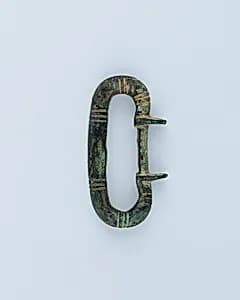
Medium
Bronze
Dimensions
H. 1 7/8 in. (4.8 cm); W. 1 in. (2.5 cm); thickness 1/4 in. (0.6 cm); Wt. 0.6 oz. (15 g)
Classification
Miscellaneous-Buckles & Ornament
Culture
Ibero-Roman
Department
Arms and Armor
Museum
Metropolitan Museum of Art, New York, NY
Credit
Gift of Bashford Dean, 1920
Accession Number
20.152.12
Rights
Public Domain
Art Historical Context
This exquisite bronze buckle, dating from around 100 BCE to 500 CE, hails from Ibero-Roman culture in the Iberian Peninsula, where indigenous Iberian traditions mingled with Roman influences during a transformative era. Measuring just 1 7/8 inches high and weighing a mere 0.6 ounces, its compact form belies its practical elegance—likely used to secure belts, straps, or harnesses. Crafted in durable bronze, a favored medium for its malleability and corrosion resistance, the buckle exemplifies the skilled metalworking of the period, possibly involving lost-wax casting or hammering techniques to achieve its precise proportions. Housed in the Metropolitan Museum of Art's Arms and Armor Department, this artifact highlights the fusion of utility and ornament in everyday Roman-influenced life. Ibero-Roman buckles like this one often adorned military gear, equestrian equipment, or civilian attire, reflecting social status and cultural exchange across the Roman Empire. Donated in 1920 by arms collector Bashford Dean, it offers a tangible glimpse into a world of conquest, trade, and craftsmanship bridging pre-Roman Iberia and late antiquity. Though the artist remains unknown, the buckle's survival underscores bronze's enduring legacy, inviting us to ponder the hands that fashioned it amid shifting empires. A small treasure with big stories!