
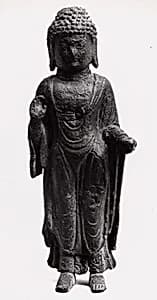
Buddha of Medicine (Bhasyajaguru)
Unknown Artist
11th–12th century
Medium
Bronze
Dimensions
H. 7 1/4 in. (18.4 cm)
Classification
Sculpture
Culture & Period
Korea · Goryeo dynasty (918–1392)
Department
Asian Art
Museum
Metropolitan Museum of Art, New York, NY
Credit
Fletcher Fund, 1938
Accession Number
38.79
Rights
Public Domain
Tags
Art Historical Context
This elegant bronze sculpture, created in Korea during the Goryeo dynasty (918–1392), depicts Bhaishajyaguru, the Buddha of Medicine. Standing just over seven inches tall, the compact figure was likely crafted for personal devotion or use within a temple setting. The Goryeo period marked a flourishing of Buddhist art in Korea, when bronze casting techniques allowed artisans to produce detailed yet portable sacred images that embodied spiritual ideals of healing and compassion. As a representation of the Medicine Buddha, the work reflects the deep integration of Buddhism into Korean society during this era, where such figures served as focal points for prayers seeking physical and spiritual well-being. The choice of bronze highlights the material’s cultural significance, prized for its durability and ability to capture fine details through casting methods refined over centuries in East Asia. Housed today at The Metropolitan Museum of Art, this 11th–12th century sculpture offers visitors a tangible connection to Goryeo-era devotion and artistic mastery. Its serene presence invites contemplation of how art and faith intertwined to support daily life and healing practices in medieval Korea.