
Buddhist Halo
Unknown Artist
8th–9th century
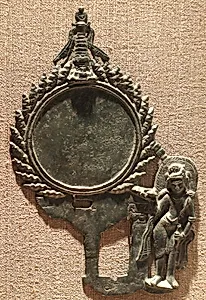
Medium
Bronze
Dimensions
H. 6 in. (15.3 cm) ; W. 4 in. (10.2 cm)
Classification
Metalwork
Culture
Pakistan (Northwest Frontier Province, Swat Valley)
Department
Asian Art
Museum
Metropolitan Museum of Art, New York, NY
Credit
Gift of Mr. and Mrs. Walter Eisenberg, 1983
Accession Number
1983.507.1
Rights
Public Domain
Tags
Art Historical Context
Nestled in the rugged Swat Valley of northwest Pakistan, this exquisite bronze *Buddhist Halo* to the 8th–9th century, a time when the region flourished as a vibrant hub ofayana Buddhism along ancient trade routes. Crafted by an unknown artist, the halo—measuring just 6 inches high and 4 inches wide—was likely part of a larger devotional sculpture, encircling the head of a Buddha or bodhisattva to symbolize enlightenment and divine radiance. Swat Valley, often called the "Switzerland of the East," was renowned for its rock-cut monasteries and stupas, preserving Gandharan artistic traditions that blended Indian, Persian, and Hellenistic influences even into this later period. The halo's bronze medium highlights masterful metalworking techniques of the era, probably lost-wax casting, which allowed for intricate detailing on a small scale. Rays or flames emanating from the disk would have caught temple torchlight, enhancing its spiritual aura and drawing worshippers into meditation. As a rare survivor from Pakistan's Northwest Frontier Province, it offers a glimpse into the valley's cultural crossroads, where Buddhism thrived before Islamic influences reshaped the landscape. Today, this gift to the Metropolitan Museum of Art from Mr. and Mrs. Walter Eisenberg in 1983 invites us to ponder the enduring glow of ancient faith in everyday artifacts.