
文鳳山水画譜|Bunpō Landscape Picture Album (Bunpō sansui gafu 文鳳山水画譜)
1824, Winter (Bunsei 7)
Medium
Woodblock printed book; ink and color on paper
Dimensions
10 3/16 × 6 13/16 in. (25.8 × 17.3 cm)
Classification
Illustrated Books
Culture & Period
Japan · Edo period (1615–1868)
Department
Asian Art
Museum
Metropolitan Museum of Art, New York, NY
Credit
Purchase, Mary and James G. Wallach Foundation Gift, 2013
Accession Number
2013.662
Rights
Public Domain
Tags
Art Historical Context
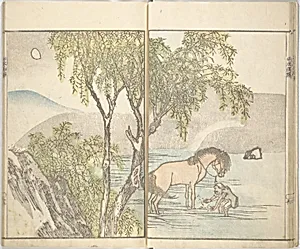
Kawamura Bunpō's *Bunpō Landscape Picture Album* (*Bunpō sansui gafu*), created the winter of 1824 Japan's Edo period (1615–1868), is a captivating woodblock-printed book featuring ink and color on paper. just 10 3/16 × 6 13/16 inches, this intimate album showcases Bunpō's mastery of landscape scenes populated with men, horses, and trees blending serene natural vistas with subtle human activity. As a *gafu*—a traditional Japanese painting manual or picture album—it served as both an artistic showcase and a practical guide for aspiring artists, reflecting the era's vibrant print culture. Produced in the Bunsei era, amid the Tokugawa shogunate's long peace, the work exemplifies the woodblock technique's precision, allowing affordable dissemination of sophisticated designs. Bunpō, a prominent ukiyo-e artist, infused his landscapes with dynamic compositions that evoke the harmony of nature and daily life, drawing from Chinese literati influences while rooting in Japanese aesthetics. These pages capture the Edo fascination with picturesque travels and pastoral retreats, offering viewers a window into 19th-century Japan's artistic ingenuity. Today, housed in the Metropolitan Museum of Art's Asian Art Department (purchase, Mary and James G. Wallach Foundation Gift, 2013), this album highlights the enduring appeal of printed books as portable art, bridging painting and publishing in a transformative period of Japanese creativity.