
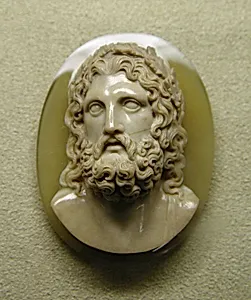
Bust of Jupiter
Unknown Artist
early 19th century
Medium
Onyx
Dimensions
Overall: 1 5/8 x 1 1/4in. (4.1 x 3.2cm); visible cameo (confirmed): 41.1 x 31.8 x 16.1 mm
Classification
Lapidary Work-Gems
Culture
Italian
Department
European Sculpture and Decorative Arts
Museum
Metropolitan Museum of Art, New York, NY
Credit
The Milton Weil Collection, 1940
Accession Number
40.20.24
Rights
Public Domain
Tags
Art Historical Context
Behold the exquisite *Bust of Jupiter*, autive masterpiece of Italian lapidary art from the early 19 century. Carved from onyx—a banded chalcedony prized for its layered contrasts—this cameo measures just 41.1 x 31.8 x 16.1 mm, small enough to adorn a ring or brooch yet capturing the thunderous majesty of the Roman of gods. The unknown artist's skill shines in the precise relief work, where the white or lighter onyx layer forms Jupiter's noble profile against a darker ground, evoking ancient grandeur in a neoclassical revival style. Cameos like this flourished in 19th-century Italy, a nod to Renaissance and classical antiquity amid Europe's fascination with Greco-Roman mythology. Onyx's durability and translucency made it ideal for such intricate sculptures, techniques honed by generations of gem cutters in workshops like those in Idar-Oberstein or Italian centers. Jupiter, symbolized by his imperial gaze and implied scepter, represented power and divine authority, making this piece a coveted emblem for collectors. Now housed in The Metropolitan Museum of Art's European Sculpture and Decorative Arts department as part of The Milton Weil Collection (1940), this gem invites us to marvel at how tiny objects can embody eternal myths, bridging ancient reverence with modern appreciation.