
Bust of the Virgin
Unknown Artist
ca. 1390–95
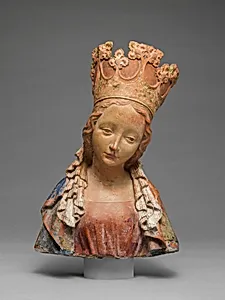
Medium
Terracotta with paint
Dimensions
12 13/16 x 8 13/16 x 5 7/16 in. (32.5 x 22.4 x 13.8 cm)
Classification
Sculpture-Ceramics
Culture
Bohemian
Department
The Cloisters
Museum
Metropolitan Museum of Art, New York, NY
Credit
The Cloisters Collection, 2005
Accession Number
2005.393
Rights
Public Domain
Tags
Art Historical Context
Nestled in The Cloisters at the Metropolitan Museum of Art, this *Bust of the Virgin (ca. 1390–95) is a poignant example of Bohemian terracotta sculpture. Crafted from fired clay and originally adorned with paint, the 12 13/16-inch-high captures the Virgin Mary, likely crowned as Queen of Heaven, in a intimate scale perfect for private devotion. Its modest dimensions—32.5 x 22.4 x 13.8 cm—suggest it graced a noble household altar or chapel, embodying the spiritual tenderness of late medieval piety. Bohemia, a thriving cultural hub in the late 14th century under the Luxembourg dynasty, produced refined sculptures like this amid a surge in Marian devotion. The unknown artist's use of terracotta, a versatile and relatively accessible medium, allowed for detailed modeling of the Virgin's serene features and flowing drapery, enhanced by now-faded polychromy for lifelike vibrancy. This technique democratized sacred art, bridging courtly elegance with widespread religious fervor. Today, as part of The Cloisters Collection (2005), it illuminates Central Europe's artistic legacy, highlighting how such busts fostered personal connection to the divine amid Gothic-era transformations in faith and aesthetics. A quiet testament to faith's enduring grace.