
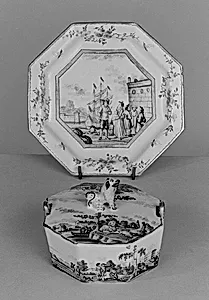
Butter dish with cover and stand
Unknown Artist
ca. 1750
Medium
Faience (tin-glazed earthenware)
Dimensions
Overall (.3a, b, dish with cover): 3 × 4 in. (7.6 × 10.2 cm); Width (.4, stand): 6 1/4 in. (15.9 cm)
Classification
Ceramics-Pottery
Culture
Dutch, Delft
Department
European Sculpture and Decorative Arts
Museum
Metropolitan Museum of Art, New York, NY
Credit
Gift of Irwin Untermyer, 1964
Accession Number
64.101.386a, b, .387
Rights
Public Domain
Tags
Art Historical Context
This charming butter dish with cover and stand, crafted around 1750 in Delft, Netherlands, exemplifies the refined artistry of Dutch faience production. Housed in The Metropolitan Museum of Art's European Sculpture and Decorative Arts department, this piece—measuring a compact 3 × 4 inches for the dish and a wider 6¼-inch stand—was a practical yet luxurious tableware item for affluent 18th-century households. potters, inspired by Chinese porcelain, created these tin-glazed earthenware objects to bring exotic elegance to everyday use, like serving fresh butter at meals. The medium of faience, with its glossy tin glaze, allowed for vibrant polychrome decorations fired at low temperatures, yielding brilliant blues, greens, and earthy tones that mimicked costlier porcelain. Adorned with lively scenes of men, women, dogs, and landscapes—likely pastoral vignettes evoking Dutch countryside idylls—the dish showcases the potters' skill in narrative painting on curved surfaces. These motifs reflected the era's Rococo taste for whimsical, populated landscapes, blending utility with storytelling. A gift from Irwin Untermyer in 1964, this anonymous masterpiece highlights Delft's golden age of ceramics (17th–18th centuries), when the city rivaled global centers for innovative, accessible luxury. Visitors can appreciate how such pieces bridged art and domestic life, preserving the warmth of Dutch hospitality.