
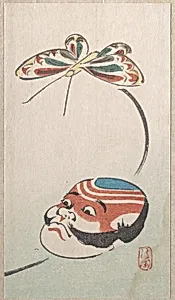
Butterfly and Mask of Yakko (the footman of a samurai)
18th–19th century
Medium
Part of an album of woodblock prints (surimono); ink and color on paper
Dimensions
5 9/16 x 3 1/8 in. (14.1 x 7.9 cm)
Classification
Prints
Culture
Japan
Department
Asian Art
Museum
Metropolitan Museum of Art, New York, NY
Credit
H. O. Havemeyer Collection, Bequest of Mrs. H. O. Havemeyer, 1929
Accession Number
JP2239
Rights
Public Domain
Tags
Art Historical Context
In the delicate world of 18th–19th-century Japanese surimono, this enchanting woodblock print by Ayaoka captures a whimsical juxtaposition: a vibrant butterfly poised beside the exaggerated mask of a yakko, the lively footman of a samurai Part of a luxurious album of prints, this small gem—measuring just 5 9/16 x 3 1/8 inches—was crafted with ink and color on paper, showcasing the precision of ukiyo-e woodblock techniques. Surimono like this were privately commissioned treasures, often shared among poetry circles or as New Year's greetings, blending artistry with personal expression during Japan's Edo period. The yakko mask, with its comical grimace drawn from kabuki theater traditions, evokes the playful chaos of samurai retinues, while the butterfly adds a poetic touch of fleeting beauty and transformation—hallmarks of Japanese aesthetics. Ayaoka's masterful use of color and fine lines brings these elements to life, highlighting the cultural fusion of performance, nature, and humor in everyday elite life. Housed in the Metropolitan Museum of Art's Asian Art Department as part of the H. O. Havemeyer Collection (1929), this print invites visitors to appreciate the intimacy of surimono albums, where everyday wonders unfold in miniature splendor.