
Caddy spoon
1826–27
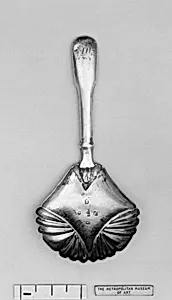
Medium
Silver
Dimensions
Length: 3 3/4 in. (9.5 cm)
Classification
Metalwork-Silver
Culture
British, Birmingham
Department
European Sculpture and Decorative Arts
Museum
Metropolitan Museum of Art, New York, NY
Credit
Gift of Mrs. Samuel P. Avery, 1897
Accession Number
97.2.178
Rights
Public Domain
Art Historical Context
In the early 19th century, tea drinking became a cherished British ritual among the middle and upper classes, specialized utensils like the caddy spoon emerged to elegantly measure portions from locked tea caddies—safeguarding the precious leaves from theft or overuse. This delicate silver example, crafted by Birmingham silversmith Thos Newbold around 1826–27, exemplifies the precision and refinement of England's Midlands metalworking tradition. At just 3¾ inches long, its slender bowl and slender handle were designed for practicality and grace, reflecting the Regency era's blend of functionality and understated luxury. Birmingham was a hub of silver innovation during this period, producing high-quality hollowware and flatware that rivaled London makers. Newbold's work highlights the era's hallmarking system, ensuring purity and authenticity—stamped marks would confirm its sterling silver composition. As a piece of domestic metalwork, it offers a glimpse into everyday opulence, where even mundane tasks were elevated by artisanal skill. Today, this caddy spoon graces the Metropolitan Museum of Art's European Sculpture and Decorative Arts collection, a gift from Mrs. Samuel P. Avery in 1897. It invites visitors to ponder how such small objects wove craftsmanship into the fabric of British social life.