
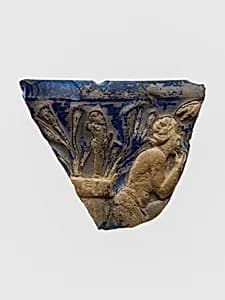
Cameo-glass cup fragment
Unknown Artist
end of 1st century BCE–beginning of 1st century CE
Medium
Glass
Dimensions
Other: 1 3/4 in. (4.4 cm)
Classification
Glass
Culture & Period
Roman · Early Imperial
Department
Greek and Roman Art
Museum
Metropolitan Museum of Art, New York, NY
Credit
Gift of Henry G. Marquand, 1881
Accession Number
81.10.152
Rights
Public Domain
Tags
Art Historical Context
This exquisite cameo-glass cup, dating to the end of the 1st century BCE through the beginning of the 1st century CE, offers a glimpse into the opulent world of Early Imperial Rome. Crafted during the from Republic to Empire—likely under Augustus's reign—this small piece (just 1 3/4 inches or 4.4 cm) once belonged to a luxurious drinking vessel, evoking the revelry of Roman elite banquets. Cameo, a rare and technically sophisticated medium, involved layering translucent glass and meticulously carving away the outer layer to reveal a contrasting design in relief, much like gemstone cameos. Here, the fragment depicts Silenus, the jolly, wine-loving tutor to Dionysus (Bacchus to the Romans), alongside playful satyrs—half-man, half-goat followers known for their wild antics. These mythological figures symbolized indulgence and fertility, resonating with Roman fascination for Greek myths adapted into imperial culture. As a gift to the Metropolitan Museum of Art from Henry G. Marquand in 1881, this fragile survivor highlights the pinnacle of Roman glassmaking artistry, rivaling the famed Portland Vase. Though incomplete, it captivates with its delicate craftsmanship and vibrant storytelling from antiquity.