
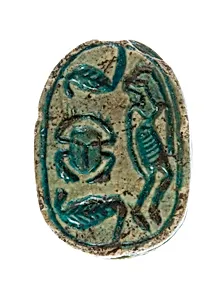
Canaanite Scarab Showing a Prostrate Man under Two Cobras and a Scarab (Emblems of a Ruler)
Unknown Artist
ca. 1600–1500 B.C.
Medium
Steatite (glazed)
Dimensions
l. 2.1 cm (13/16 in)
Classification
Scarab, cobras, ruler emblems
Period
Early New Kingdom
Department
Egyptian Art
Museum
Metropolitan Museum of Art, New York, NY
Credit
Theodore M. Davis Collection, Bequest of Theodore M. Davis, 1915
Accession Number
30.8.765
Rights
Public Domain
Tags
Art Historical Context
This exquisite Canaanite scarab, crafted around 1600–1500 B.C. during Egypt’s Early New Kingdom and Dynasty 18, captures the intricate cultural exchanges of the ancient Near East. Carved from glazed steatite and measuring just over two centimeters in length, the tiny seal depicts a prostrate man beneath two rearing cobras and a prominent scarab beetle—symbols traditionally associated with royal authority and protection. Such objects were often used as amlets or administrative seals, blending Canaanite artistic traditions with Egyptian iconography. The piece’s presence in the Metropolitan Museum’s Egyptian Art collection highlights the period’s dynamic trade and political interactions between Egypt and the Levant. Glazed steatite allowed artisans to achieve vibrant, durable surfaces ideal for detailed miniature carving, making these scarabs both practical and symbolically potent. The imagery of submission under emblems of power likely served to affirm rulership or divine favor. Visitors can appreciate how this small artifact reflects broader themes of authority and cross-cultural influence in the ancient world. Its survival through millennia offers a tangible connection to the rulers and artisans of the Bronze Age.