
Canopic jar of Heriheb
Unknown Artist
522–343 B.C.
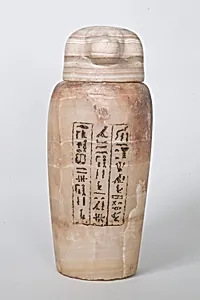
Medium
Travertine (Egyptian alabaster)
Dimensions
H. 28.3 × Diam. 15.5 cm (11 1/8 × 6 1/8 in.)
Classification
Canopic jar, Heriheb
Period
Late Period
Department
Egyptian Art
Museum
Metropolitan Museum of Art, New York, NY
Credit
Gift of Gorham Bacon, 1921
Accession Number
21.5a
Rights
Public Domain
Art Historical Context
Step into the mysterious world of ancient Egyptian funerary rituals with the *Canopic Jar of Heriheb*, a poignant artifact from Egypt's Late Period (522–343 B.C.). Canopic jars like this one were essential in mummification, safeguarding the deceased's internal organs—lungs, stomach, intestines, and liver—believed to be vital for the afterlife journey. Crafted for Heriheb, likely a figure of some prominence, this jar exemplifies the Egyptians' profound belief in immortality and the afterlife, bridging the living and divine realms during a time of political flux under Persian and native dynasties. Carved from translucent travertine, known as Egyptian alabaster, the jar's smooth, luminous surface (H. 28.3 × Diam. 15.5 cm) highlights the stone's prized qualities for sacred objects. Its elegant form, adorned with hieroglyphic inscriptions, showcases masterful stone-carving techniques that allowed intricate detailing without fragility. Alabaster's softness enabled fine work, while its warm glow evoked purity and eternity. Today, this treasured piece resides in the Metropolitan Museum of Art's Egyptian Art department, a 1921 gift from Gorham Bacon. It invites us to ponder the artistry and devotion poured into preparing for eternity, reminding visitors of Egypt's enduring cultural legacy.