
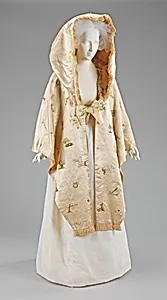
Cape
Unknown Artist
1795–1800
Medium
silk
Classification
Cape
Culture
British
Department
Costume Institute
Museum
Metropolitan Museum of Art, New York, NY
Credit
Brooklyn Museum Costume Collection at The Metropolitan Museum of Art, Gift of the Brooklyn Museum, 2009; Designated Purchase Fund, 1982
Accession Number
2009.300.3890
Rights
Public Domain
Art Historical Context
This elegant silk cape, crafted in Britain between 1795 and 1800, offers a glimpse into the refined world of late Georgian fashion. Produced during a period of neoclassical revival, when lightweight, flowing garments drew inspiration from ancient Greek and Roman drapery, capes like this served as stylish outerwear for women. Often paired with high-waisted empire-line gowns, they provided modest coverage while accentuating the era's emphasis on graceful silhouettes and natural forms. The use of silk underscores its luxurious status—imported or domestically woven from fine threads, this shimmering fabric was a mark of wealth and sophistication. Hand-stitched details and intricate pleating would have caught the light, highlighting the wearer's social standing amid Britain's growing textile industry, fueled by innovations like the spinning jenny and water frame. Housed in the Met's Costume Institute from the Brooklyn Museum collection, this anonymous masterpiece preserves the artistry of everyday elegance from a transformative age, bridging the opulent 18th century with the Romantic 19th. Visitors can imagine it swirling through London salons or countryside promenades, a testament to fashion's role in storytelling.