
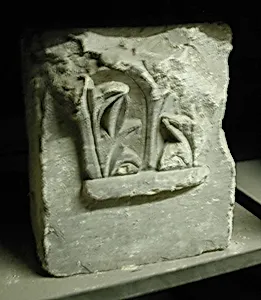
Capital with Acanthus Leaves
Unknown Artist
6th–7th century
Medium
Limestone; carved in relief
Dimensions
H. 12 3/16 in. (31 cm) W. 10 1/4 in. (26 cm) D. 4 3/4 in. (12.1 cm)
Classification
Sculpture
Department
Islamic Art
Museum
Metropolitan Museum of Art, New York, NY
Credit
Rogers Fund, 1910
Accession Number
10.175.101
Rights
Public Domain
Art Historical Context
This exquisite limestone capital, carved in relief during the 6th–7th century, showcases lush acanthus leaves swirling in intricate patterns—a motif rooted in classical Greco-Roman and Byzantine traditions. Measuring just over 12 inches tall, this compact architectural element would have crowned a column, supporting arches or beams in an early mosque, palace, or public building. The Rogers Fund acquisition in 1910 brought it to the Metropolitan Museum Art's Department of Islamic Art, where stands as a testament to masterful stone carving techniques honed in the Late Antique world. The relief technique, where forms are subtly raised from the stone's surface, allowed artisans to create depth and shadow with economical chisel work, highlighting the leaves' natural vigor while conserving material. This piece reflects the dawn of Islamic art, blending pre-Islamic Hellenistic influences with emerging cultural identities in regions like Syria or Egypt. Acanthus decoration symbolized eternal life and abundance, bridging pagan antiquity to the new era of Islam. Visitors will appreciate how such capitals adorned sacred and civic spaces, inviting contemplation of continuity amid profound historical change. A delicate survivor of time, it whispers of skilled hands shaping stone into enduring beauty.