
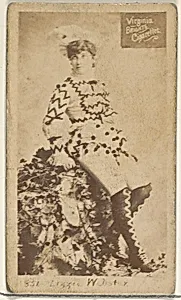
Card 851, Lizzie Webster, from the Actors and Actresses series (N45, Type 2) for Virginia Brights Cigarettes
ca. 1888
Medium
Albumen photograph
Dimensions
Sheet: 2 3/4 x 1 3/8 in. (7 x 3.5 cm)
Classification
Photographs|Ephemera
Department
Drawings and Prints
Museum
Metropolitan Museum of Art, New York, NY
Credit
The Jefferson R. Burdick Collection, Gift of Jefferson R. Burdick
Accession Number
63.350.203.45.1002
Rights
Public Domain
Tags
Art Historical Context
Step into the vibrant world of 19th-century celebrity culture with *Card 851, Lizzie Webster*, from Allen & Ginter's Actors and Actresses series (N45, Type 2), issued around 1888 to promote Virginia Brights Cigarettes. This petite albumen photograph captures the poised portrait of actress Lizzie Webster, one of many performers immortalized in these collectible trading cards tucked inside cigarette packs. Allen & Ginter, pioneering tobacco entrepreneurs, revolutionized marketing by blending photography with ephemera, turning everyday smokers into avid collectors of theater stars. The albumen's rich tonal warmth and fine detail shine in this tiny format— just 2 3/4 x 1 3/8 inches—making it a marvel of miniature portraiture. Popular in the Victorian era, the albumen process coated paper with egg whites and silver salts for sharp, luminous images, perfectly suited to mass-produced cards that celebrated the era's booming stage world, where actresses like Webster embodied glamour and intrigue. Housed in The Metropolitan Museum of Art's Jefferson R. Burdick Collection, this card highlights the dawn of modern fandom and advertising. It whispers of a time when theater portraits bridged high art and popular commerce, inviting us to ponder the stars who lit up Gilded Age imaginations.
About the Artist
Allen & Ginter
Allen & Ginter, the pioneering American tobacco firm based in Richmond, Virginia, emerged around 1880 from the partnership of John F. Allen and Lewis Ginter, evolving from Allen's earlier John F. Allen & Company. Allen retired in 1882, succeeded by John Pope, yet the brand endured under Ginter's leadership, employing over 1,100 workers—mostly women—for hand-rolled cigarettes by 1886. Ginter, a Dut...