
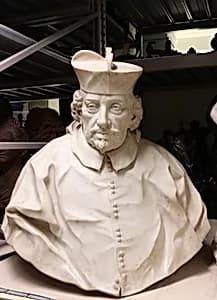
Cardinal Raimondo Capizucchi (1616–1691)
ca. 1681–91
Medium
Marble
Dimensions
Height: 39 in. (99.1 cm)
Classification
Sculpture
Culture
Italian, Rome
Department
European Sculpture and Decorative Arts
Museum
Metropolitan Museum of Art, New York, NY
Credit
Purchase, Joseph Pulitzer Bequest, 1920
Accession Number
20.124a, b
Rights
Public Domain
Tags
Art Historical Context
In the opulent world of 17th-century Rome, marble portrait busts like *Cardinal Raimondo Capizchi* (ca. 1681–91) as powerful symbols of ecclesiastical prestige and piety. Crafted by the renowned Baroque sculptor Domenico Guidi1625–1701), this life-sized bust captures the cardinal—a prominent Roman churchman who lived from 6 to 1691—in a moment of dignified introspection. Guidi, a pupil of Alessandro Algardi and a master of the Roman Baroque style, was celebrated for his ability to infuse marble with dramatic realism and emotional depth, blending classical ideals with the era's theatrical flair. The sculpture's polished white marble exemplifies the technical virtuosity of Italian sculptors, who quarried Carrara stone for its luminous translucency. Guidi's handling of texture—from the cardinal's finely veined drapery to the subtle modeling of his face—highlights his skill in capturing individuality amid idealized grandeur. Commissioned likely for a family chapel or palace, such busts were essential to Counter-Reformation portraiture, immortalizing clergy as spiritual leaders amid Rome's fervent artistic patronage under popes like Innocent XI. Today, this masterpiece resides in The Metropolitan Museum of Art's European Sculpture and Decorative Arts department, acquired in 1920 through the Joseph Pulitzer Bequest. It invites visitors to ponder the intersection of faith, power, and artistry in Baroque Italy, where stone was sculpted not just to endure, but to inspire awe.