
Case (Inrō ) with Design of a Gourd Vine
18th century
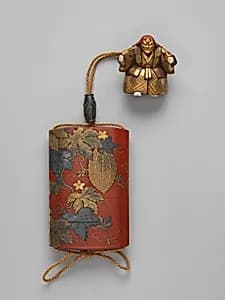
Medium
Case: gold, colored lacquer, gold leaf, and gold foil on red lacquer; Fastener (ojime): metal with design of flowers and insects; Toggle (netsuke): ivory and lacquer carved in the shape of a Noh dancer
Dimensions
H. 3 5/8 in. (9.2 cm); W. 2 3/8 in. (6 cm); D. 11/16 in. (1.8 cm)
Classification
Inrō
Culture & Period
Japan · Edo period (1615–1868)
Department
Asian Art
Museum
Metropolitan Museum of Art, New York, NY
Credit
H. O. Havemeyer Collection, Bequest of Mrs. H. O. Havemeyer, 1929
Accession Number
29.100.848
Rights
Public Domain
Tags
Art Historical Context
This exquisite *Inrō* (a portable lacquer case) by Koma Yasut, crafted in 18th-century Japan during the Edo period (161–1868), exemplifies the refined artistry of the era's lacquer masters. Inrō were essential accessories for men of status, such as samurai and merchants, who suspended them from silk cords on their belts to medicines, seals, or tobacco. Worn daily, these small cases (just 3⅝ inches tall) combined functionality with stunning decoration, showcasing the wearer's taste and wealth amid Japan's peaceful, prosperous urban culture. Koma Yasutada, from the esteemed Koma school of lacquer artists, adorned the red lacquer base with intricate designs of gourd vines—symbols of longevity and abundance—using gold leaf, foil, and colored lacquers for a shimmering, multi-layered effect. The ensemble includes a metal *ojime* (cord fastener) etched with flowers and insects, and an ivory *netsuke* toggle carved as a Noh dancer, blending realism with theatrical flair. These techniques highlight *maki-e* (sprinkled gold powder) traditions, where patience and precision created enduring luster. Part of the Metropolitan Museum of Art's H.O. Havemeyer Collection, this Inrō captures Edo Japan's fusion of nature, performance, and everyday elegance, inviting us to appreciate how personal objects became wearable art.