
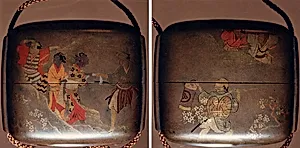
Case (Inrō) with Design of Cherry-Blossom Viewing
late 18th–19th century
Medium
Lacquer decorated with togidashi sprinkled and polished lacquer; Ojime: stone bead with silver bird inlay; Netsuke: metal button engraved with figure of Fukurokuju
Dimensions
2 1/2 x 2 13/16 x 1 1/4 in. (6.3 x 7.2 x 3.1 cm)
Classification
Inrō
Culture & Period
Japan · Edo period (1615–1868)
Department
Asian Art
Museum
Metropolitan Museum of Art, New York, NY
Credit
Rogers Fund, 1913
Accession Number
13.67.86
Rights
Public Domain
Tags
Art Historical Context
This exquisite inrō from Japan’s Edo period (1615–1868) served as a portable case for seals or medicines, suspended from a sash by its netsuke and secured with an ojime bead. Created by the renowned Kajikawa School of lacquer artists in the late 18th to 19th century, it captures the refined tastes of the era’s urban elite. The design depicts a lively cherry-blossom viewing scene—hanami—featuring men and women beneath lanterns, evoking the seasonal pleasures and social gatherings cherished in Edo society. The case’s surface employs the sophisticated togidashi technique, in which layers of sprinkled gold and silver lacquer are meticulously polished to create a smooth, luminous finish that enhances the delicate floral and figural motifs. Complementing the inrō are a stone ojime bead with silver bird inlay and a metal netsuke engraved with Fukurokuju, one of the Seven Lucky Gods, adding both functional elegance and symbolic good fortune. Housed in the Metropolitan Museum of Art’s Asian Art collection, this compact treasure (just over two inches tall) highlights the extraordinary skill of Japanese lacquerwork and the cultural importance of seasonal celebrations in daily life.