
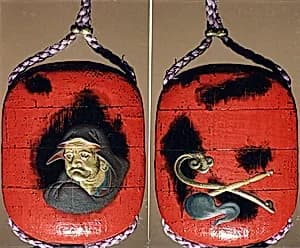
Case (Inrō) with Design of Daruma (obverse); Fly Whisk and Scepter (reverse)
Unknown Artist
19th century
Medium
Lacquer, red, textile background, gold, silver and black hiramakie, takamakie; Interior: roiro and fundame
Dimensions
2 3/16 x 1 3/4 x 9/16 in. (5.6 x 4.4 x 1.5 cm)
Classification
Inrō
Culture & Period
Japan · Edo period (1615–1868)
Department
Asian Art
Museum
Metropolitan Museum of Art, New York, NY
Credit
H. O. Havemeyer Collection, Bequest of Mrs. H. O. Havemeyer, 1929
Accession Number
29.100.842
Rights
Public Domain
Tags
Art Historical Context
This exquisite 19th-century Japanese *inrō*, a compact lacquer case from the Edo period (161–1868), served as a portable container for medicines, seals, or tobacco, suspended from the belt via a netsuke and cord. Measuring just over 2 inches tall, its diminutive size belies its masterful craftsmanship, reflecting the refined artistry of urban Edo culture where such accessories were status symbols for samurai and merchants alike. The obverse features Daruma, the legendary Zen Buddhist monk Bodhidharma, depicted in dynamic pose amid a textile-like background, while the reverse shows a fly whisk and scepter—emblems of monastic authority. These motifs evoke Buddhist themes of enlightenment and discipline, popular in Edo decorative arts. The exterior gleams with red lacquer enhanced by *hiramakie* (flat gold, silver, and black sprinkles) and *takamakie* (raised sprinkles) for textured depth, while the interior shines in polished *roiro* black lacquer and *fundame* gold powder, showcasing the era's pinnacle of *makie* techniques that blended functionality with opulent beauty. Part of the Metropolitan Museum of Art's H. O. Havemeyer Collection, this anonymous masterpiece highlights Japan's lacquer legacy, where everyday objects became canvases for spiritual iconography and technical virtuosity.