
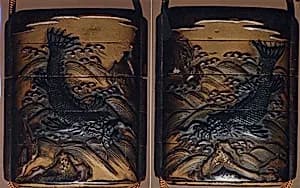
Case (Inrō) with Design of Dragonfish beside Rocks and Waves
Unknown Artist
17th–18th century
Medium
Lacquer, fundame, roiro, gold, silver and brown hiramakie, applied metal; Interior: nashiji and fundame
Dimensions
2 3/4 x 2 3/16 x 15/16 in. (7 x 5.6 x 2.4 cm)
Classification
Inrō
Culture & Period
Japan · Edo (1615–1868) or Meiji period (1868–1912)
Department
Asian Art
Museum
Metropolitan Museum of Art, New York, NY
Credit
Rogers Fund, 1912
Accession Number
12.134.3
Rights
Public Domain
Tags
Art Historical Context
This exquisite inrō or portable case, dates to Japan’s Edo period (1615–1868), when such lacquered containers became essential accessories for men. Worn suspended from the sash, inrō held small items like medicines or seals. Their compact form and intricate decoration reflected both practical needs and the refined tastes of the merchant and samurai classes during a time of peace and cultural flourishing. The case features a dynamic design of a dragonfish gliding beside rocks and waves, rendered in delicate hiramakie lacquer with gold, silver, and brown powders. The shimmering fundame and roiro surfaces, combined with applied metal details, create a sense of movement and depth within the tiny space. Inside, nashiji pear-skin lacquer adds a warm, textured glow. These painstaking techniques highlight the high status of lacquer artistry in Japanese decorative traditions. Measuring just under three inches tall, this work demonstrates how everyday objects were transformed into miniature masterpieces. Its presence in the Metropolitan Museum’s collection underscores the enduring appeal of Edo-period craftsmanship to audiences worldwide.