
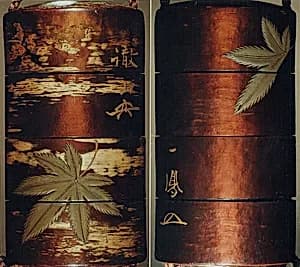
Case (Inrō) with Design of Maple Leaves beside Inscriptions
19th century
Medium
Lacquer, cherry bark, gold hiramakie; Interior: plain and roiro
Dimensions
3 5/8 x 1 7/8 x 1 in. (9.2 x 4.8 x 2.6 cm)
Classification
Inrō
Culture & Period
Japan · Edo (1615–1868) or Meiji period (1868–1912)
Department
Asian Art
Museum
Metropolitan Museum of Art, New York, NY
Credit
Rogers Fund, 1913
Accession Number
13.67.7
Rights
Public Domain
Art Historical Context
This exquisite *Inrō* (lacquer case) from the Kajikawa School exemplifies the pinnacle of Edo-period (or early Meiji) Japanese craftsmanship in the 19th century. Inrō were portable containers worn suspended from a kimono sash via cords, netsuke toggles, and ojime, used by samurai, merchants, and to carry medicines, seals, or tobacco. Crafted at just 3 5/8 x 1 7/8 x 1 inches, this compact case reflects the era's fascination with refined, functional luxury amid Japan's isolationist Tokugawa shogunate. The exterior features a poetic design of maple leaves—symbols of autumn's fleeting beauty—flanking elegant inscriptions, rendered in gold *hiramakie* technique. Here, gold powder is sprinkled over wet lacquer (urushi) and meticulously burnished flat for a shimmering, raised effect, incorporating cherry bark for texture. The interior contrasts with plain lacquer and glossy *roiro* (mirror-black finish), showcasing the Kajikawa School's mastery of layered lacquering, a process demanding years of apprenticeship due to urushi's toxicity and precision. Acquired through the Rogers Fund in 1913, this Metropolitan Museum of Art treasure highlights lacquerware's cultural role in Japan, blending artistry with everyday utility and evoking the wabi-sabi aesthetic of impermanence. A true pocket-sized masterpiece!