
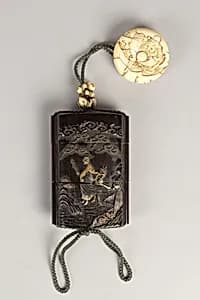
Case (Inrō) with Design of Ōni (Demon) Standing Behind Cloak of Arhat (obverse); Fly Whisk (Hossu) beneath Pine Tree (reverse)
19th century
Medium
Wood ebony, carved relief with inlay of ivory, metal and malachite; Interior: plain; Netsuke: Jurojin on crane; Ojime: Child climbing rope
Dimensions
H. 4 3/16 in. (10.6 cm); W. 2 13/16 in. (7.2 cm); D. 1 1/8 in. (2.9 cm)
Classification
Inrō
Culture & Period
Japan · Meiji period (1868–1912)
Department
Asian Art
Museum
Metropolitan Museum of Art, New York, NY
Credit
Gift of Mrs. George A. Crocker (Elizabeth Masten), 1937
Accession Number
38.25.132
Rights
Public Domain
Art Historical Context
This exquisite *inrō*, crafted by the Japanese artist Tokoku in the Meiji period (1868–1912), exemplifies the refined artistry of 19th-century Japan. *Inrō* were portable, tiered cases worn suspended from a kimono sash, used to carry medicines, seals, or tobacco. Suspended by a silk cord and secured with an *ojime* bead and *netsuke* toggle, this ebony wood example measures just over 4 inches tall, highlighting the demand for compact, functional luxury items during Japan's era of rapid modernization. The obverse features a carved relief of an ōni (fierce demon) lurking behind the cloak of an arhat—a Buddhist enlightened disciple—creating a playful contrast between menace and serenity. The reverse depicts a *hossu* (fly whisk, a Zen priest's symbol of enlightenment) beneath a stately pine tree, evoking longevity and spiritual poise. Tokoku's mastery shines in the intricate relief carving and inlays of ivory, metal, and malachite, which add vivid texture and color to the dark ebony. Accompanied by a netsuke of Jurojin—the god of longevity—astride a crane, and an ojime showing a child climbing a rope (symbolizing youthful determination), this ensemble reflects Meiji Japan's blend of folklore, Buddhism, and whimsy. A gift to the Metropolitan Museum of Art in 1937, it invites visitors to appreciate the cultural role of these heirlooms in daily Edo-to-Meiji life.