
Case (Inrō) with Design of Scattered Hollyhock (Aoi) Leaves
Unknown Artist
18th century
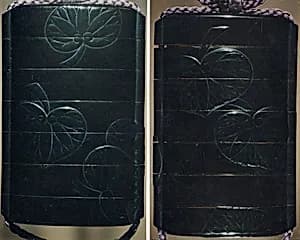
Medium
Lacquer, roiro, yamimakie, black hiramakie; Interior: nashiji and fundame
Dimensions
4 x 2 5/8 x 1 1/8 in. (10.1 x 6.6 x 2.8 cm)
Classification
Inrō
Culture & Period
Japan · Edo period (1615–1868)
Department
Asian Art
Museum
Metropolitan Museum of Art, New York, NY
Credit
Rogers Fund, 1912
Accession Number
12.134.23
Rights
Public Domain
Art Historical Context
Step into the refined world of Edo-period Japan (1615–1868) with this exquisite 18th-century *inrō*, a compact lacquer case designed for carrying personal items like medicines, seals or tobacco. Worn suspended from a samurai's or merchant's sash (obi) via a netsuke toggle and ojime bead, these portable treasures were both functional and a canvas for artistic expression during Japan's peaceful, prosperous era. Measuring just 4 x 2⅝ x 1⅛ inches, this example from the Metropolitan Museum of Art exemplifies the meticulous craftsmanship of lacquerware, a medium prized for its durability and glossy allure. The exterior dazzles with scattered hollyhock (*aoi*) leaves, rendered in sophisticated techniques: shimmering *roiro* (mirror-black lacquer), *yamimakie* (gold powder sprinkled to evoke a starry night), and *black hiramakie* (flat black lacquer with sprinkled motifs). Inside, *nashiji* (pearlescent gold flecks resembling nashi pear skin) and *fundame* (gold or silver foundation) create a luxurious contrast. Hollyhock leaves held symbolic weight, linked to the powerful Tokugawa shogunate, suggesting the owner's status. This *inrō* highlights lacquer's evolution into high art during the Edo period, blending utility with poetic design. Acquired via the Rogers Fund in 1912, it invites us to appreciate Japan's mastery of subtlety and shine.